

- Political headlines create anxiety but rarely impact long-term market performance; markets are driven by earnings, innovation, and consumer demand, not political theater.
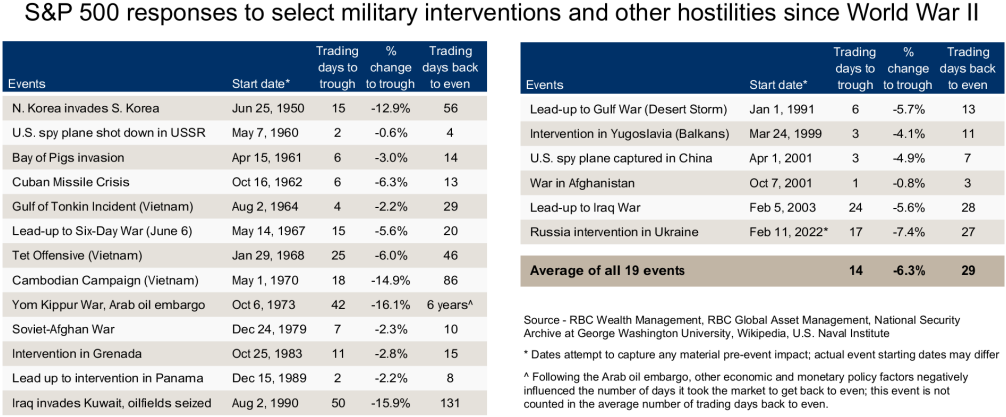
- The S&P 500 has trended upward through wars, civil unrest, and 40+ administrations, demonstrating that markets ultimately evaluate economic results, not political rhetoric.
- Political friction becomes economically material when it triggers energy price shocks, spikes in bond yields, or sudden regulatory changes that affect business costs and credit availability.
- Recent policy announcements (like tariffs post-"Liberation Day" 2025) do move markets, but lasting impacts have been limited; investors must be prepared to endure volatility without abandoning long-term strategy.
- Successful wealth management requires containing emotional reactions to events and maintaining diversified, balanced portfolios built to withstand multiple political and economic outcomes.
As we navigate the opening months of 2026, the digital landscape is more crowded than ever with "breaking news" alerts and geopolitical commentary. From shifting trade alliances to the high-stakes transition within the Federal Reserve, the volume of political discourse has reached a crescendo. For many investors, this creates a state of perpetual anxiety—a feeling that the next headline could be the one that upends their financial security.
However, one of the most vital lessons in wealth management is the ability to distinguish between "Political Noise" and "Economic Signals." While politics is loud, emotional, and visceral, the markets are ultimately cold, calculating machines. They are fueled by corporate earnings, technological innovation, and consumer demand—forces that are remarkably resilient to whoever happens to be occupying a capital city at any given moment.
Markets look long past the headline of the day
History is our most reliable witness here. Over the last century, the U.S. stock market has trended upward through world wars, civil unrest, and dozens of different administrations of varying ideologies. The S&P 500 does not check the voter registration of the U.S. president; it checks the economic results of their policies, with little attention paid to the tone in which they are delivered. Still, it would be intellectually dishonest to say politics never matters. The past year is a great example. We have always operated under the mantra of “do not make an investment based on what a politician may or may not do”. Sadly, we no longer have that luxury. The past year has seen more than a few market-moving presidential announcements and we expect more to come. Thus far, however, we have not seen a lasting impact from policy announcements.
The Signal vs. The Noise
To understand why political noise rarely impacts your portfolio, a good place to start is first principles. The value the market assigns to a company is the estimated value today of all the money a company is expected to make over the next twenty or thirty years. When a politician makes a provocative speech or war breaks out halfway around the world, it may cause a "flutter" in the price today, but it rarely changes the long-term trajectory of earnings for the world’s greatest companies. Our experience suggests investors who change long-term asset allocations based on emotions (that are often entirely justified) often find themselves on the wrong side of history.
There are some specific scenarios where politics stops being noise and starts being a "signal." These are the moments when political friction actually changes the cost of doing business, the availability of resources or access to credit at reasonable interest rates.
- Energy price shock - The most immediate way politics can disrupt a portfolio is through the energy markets. Oil is the lifeblood of the global economy, and its price affects the cost of the plastic that encases the device you are likely reading this on, the fuel in the trucks delivering our groceries, and the electricity powering the massive data centers of the AI revolution. When political instability threatens the physical supply of energy, we see a "Geopolitical Risk Premium" added to the price of a barrel. If oil spikes from $70 to $110 because of a political standoff, it acts as an immediate "tax" on every consumer and most corporations on the planet, materially increasing the risk of economic recession and all that comes with it – lower earnings, lower valuations, and often a sharp decline in the major stock indices.
- A spike in bond yields – The second critical signal is found in the cost of borrowing, specifically the yield on the 10-year U.S. Treasury bond. As we witnessed in 2022, when interest rates go up sharply and without warning, everything else (stocks, real estate, gold) tends to go lower in price. Politics impacts bond yields when the market begins to question the "fiscal sanity" of a government. A perfect example is what happened in the U.K. in 2022 when the new government proposed sharply lower taxes with no way to pay for them, resulting in a doubling of 10-year U.K. bond yields. When mortgage rates rise or corporate debt becomes more expensive to service, it directly impacts the valuation of the stock market.
- Sudden changes in policies and regulations – A government upending an industry’s norms through new regulations or the impact on the economy of implementing new taxes is often disruptive. The most recent and clear example here is of course the U.S.’s shift toward tariffs as a way to rebalance trade. For a generation, the direction of travel was toward freer trade with more and more countries taking part. This trend benefited consumers and corporations in the form of lower cost goods and higher profit margins, respectively, but the benefit to developed economy workers has been debatable. The jury is out as to who will benefit from higher tariffs, but few of us will forget the market reaction following “Liberation Day” in 2025.
Bottom Line
Our long-standing advice is simple, but also easier said than done: Do not let political convictions dictate investment strategy. It is important to remember that financial plans were built to handle a wide range of political outcomes and are constructed with appropriate ballast. This means portfolios hold a mix of high-quality bonds to protect against stock market volatility and diversified equity exposure to capture the relentless march of human innovation. Executing a successful financial plan amounts to a long-term engineering project, with the media and our emotions doing their best to disrupt it! The best way to assure long-term success is by focusing on the signals and ignoring the theater, and we are the first to admit it isn’t always easy.
The Harbour Group
416-842-2300
Putting you first, every time, to help you navigate the complexities of managing your wealth. All of our team members, all of our resources, all of our collective insight: ALL FOR ONE: YOU™.
The information contained herein has been obtained from sources believed to be reliable at the time obtained but neither RBC Dominion Securities Inc. nor its employees, agents, or information suppliers can guarantee its accuracy or completeness. This report is not and under no circumstances is to be construed as an offer to sell or the solicitation of an offer to buy any securities. This report is furnished on the basis and understanding that neither RBC Dominion Securities Inc. nor its employees, agents, or information suppliers is to be under any responsibility or liability whatsoever in respect thereof. The inventories of RBC Dominion Securities Inc. may from time to time include securities mentioned herein. RBC Dominion Securities Inc. and its affiliates may have an investment banking or other relationship with some or all of the issuers mentioned herein and may trade in any of the securities mentioned herein either for their own account or the accounts of their customers. RBC Dominion Securities Inc. and its affiliates also may issue options on securities mentioned herein and may trade in options issued by others. Accordingly, RBC Dominion Securities Inc. or its affiliates may at any time have a long or short position in any such security or option thereon. Mutual funds are sold by RBC Dominion Securities Inc. There may be commissions, trailing commissions, management fees and expenses associated with mutual fund investments. Read the prospectus before investing. Mutual funds are not guaranteed, their values change frequently and past performance may not be repeated. RBC Dominion Securities Inc.* and Royal Bank of Canada are separate corporate entities which are affiliated. *Member CIPF. ®Registered Trademark of Royal Bank of Canada. Used under licence. RBC Dominion Securities is a registered trademark of Royal Bank of Canada. Used under licence. ©Copyright 2019. All rights reserved.