

As we look ahead, the outlook for markets in 2026 will largely come down to two things: how fast the economy grows and whether corporate earnings continue to rise. Right now, both are moving in a direction that supports further gains for investors — but there are also enough risks on the horizon to justify staying disciplined rather than overly aggressive.
Over the past year, global stock markets have delivered strong returns. U.S. equities have risen solidly, and many international markets have actually done better despite facing trade tensions and slower growth narratives. Valuations today are above long-term averages, which means markets aren’t cheap. However, they’re also not at the extreme levels seen during past bubbles. In other words, stocks may be priced for optimism, but they’re not necessarily priced for perfection.
Looking forward, current forecasts suggest corporate earnings could grow at a healthy pace this year. Analysts expect profits to rise meaningfully from last year’s levels, and that earnings growth is the key driver behind projections for additional market gains. Historically, when economic growth lands in the moderate range — roughly a bit above 2% — equity markets have tended to deliver solid annual returns. Recent economic data has been encouraging enough that growth estimates are being revised higher, which strengthens the case for continued market momentum.
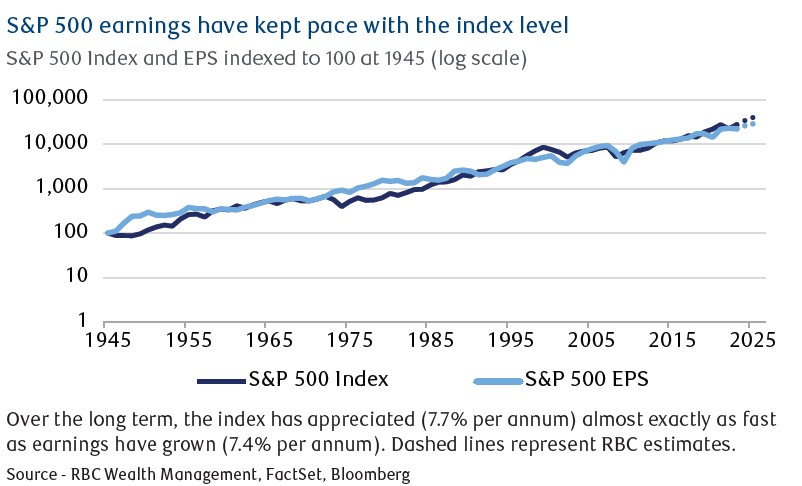
Monetary policy is another factor supporting the outlook. Interest rate cuts implemented over the past year and a half typically take time to work their way through the economy. We’re now entering the period when those earlier cuts should begin having their strongest impact. Lower borrowing costs tend to stimulate spending, investment, and hiring, all of which help support corporate profits and stock prices.
The consumer environment, which is critical to economic growth, also looks reasonably stable. Employment remains steady, layoffs have been trending lower, and many businesses say they plan to hire and raise wages. Real incomes are expected to grow modestly, and tax refunds should provide an additional boost to spending earlier in the year. Lending conditions for consumers are easing as well, making it somewhat easier for households to access credit.
Businesses appear cautiously optimistic too. Surveys show many companies intend to increase capital spending, particularly in areas like technology, infrastructure, and supply chain reshoring. These investments can improve productivity and support longer-term growth. Large-scale projects tied to energy, manufacturing, and logistics are also underway in several regions, providing multiyear economic tailwinds.
That said, the outlook is far from risk-free. Not all households are benefiting equally from economic growth, and lower-income consumers are still under pressure from higher living costs. Infrastructure constraints — especially around energy supply — could slow expansion in power-intensive industries. Labor shortages remain a major challenge as well, particularly for highly skilled roles. Companies want to expand but sometimes struggle to find qualified workers, which can delay projects and raise costs.
There’s also a psychological element worth watching: business leaders report growing unease about the policy environment. Uncertainty around government decisions, regulation, and geopolitical developments can weigh on confidence, even when economic data looks solid. And historically, election cycles — especially midterm election years — have often brought periods of market volatility. Pullbacks during such years are common, though they’re frequently followed by strong rebounds once uncertainty clears.
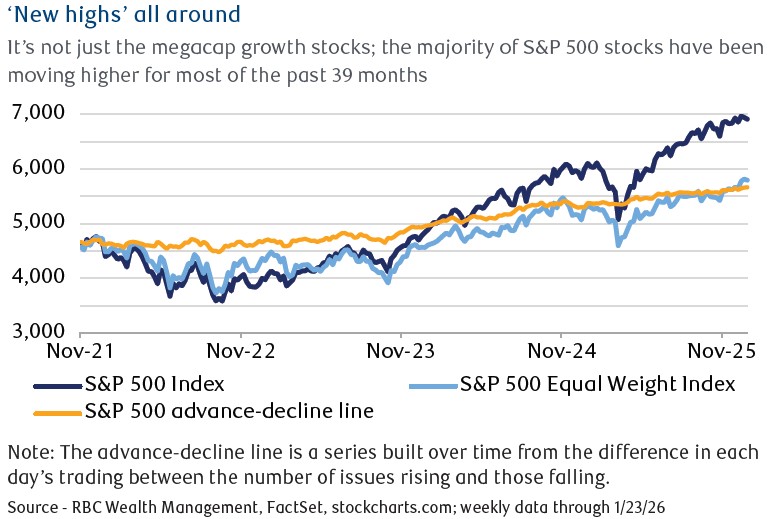
One encouraging technical sign is market breadth. Recently, a wide range of stocks — not just a handful of large companies — have been participating in market gains. When many stocks rise together, it often indicates a healthier and more durable bull market. Major market peaks typically occur only after participation narrows significantly, which hasn’t happened yet.
So what does all this mean for investors?
The current environment supports staying invested in equities, but with balance and discipline. The fundamental backdrop — steady growth, rising earnings, and supportive monetary policy — suggests markets could reach new highs over time. However, valuations, policy uncertainty, and seasonal volatility risks argue against becoming overexposed.
The most sensible approach is to remain aligned with your long-term investment plan rather than reacting emotionally to short-term market moves. Periodic volatility should be expected, not feared. In fact, temporary market pullbacks often create opportunities for disciplined investors.
In short, the story for 2026 isn’t about guessing headlines or timing market swings. It’s about watching the fundamentals. If economic growth continues and earnings keep rising, markets will likely follow. If those pillars weaken, expectations will need to adjust. For now, the signals point to cautious optimism — invested, but watchful.