

Although COVID continues to be a pressing concern for our country, the CRA has not announced an extension to the tax filing deadline for the 2020 tax year. Clients should seek the advice of their personal accountant and tax advisor. That said, we recognize that many clients may opt to manually file their taxes on their own. This may be a long-standing habit and tradition for them at this time of year and the exercise may even be straight forward. That said, the last couple of years have introduced some newer deduction and tax credit opportunities which, if not careful, could be missed. In this case, I am speaking from experience!
Digital News Subscription Tax Credit: Line 31350
New to the 2020 tax year is the digital news subscription tax credit. This is a non-refundable tax credit for amounts paid by individuals to a qualified Canadian journalism organization (QCJO) for their qualifying subscriptions. For example, The Toronto Star, The Globe and Mail and National Post are all qualifying subscriptions. The maximum claim amount is $500 paid by an individual for qualifying subscription expenses. If more than one individual is entitled to make a claim for the year (i.e. spouses, roommates, etc.), the total amount can be split between them provided the maximum claim amount is not exceeded. Subscribers should keep all receipts in case of a CRA review.
Key Links for more Info:
Digital New Subscription Tax Credit (Government Site)
List of Qualifying Digital News Subscriptions
Home Office Expenses: Form T777S and Line 22900
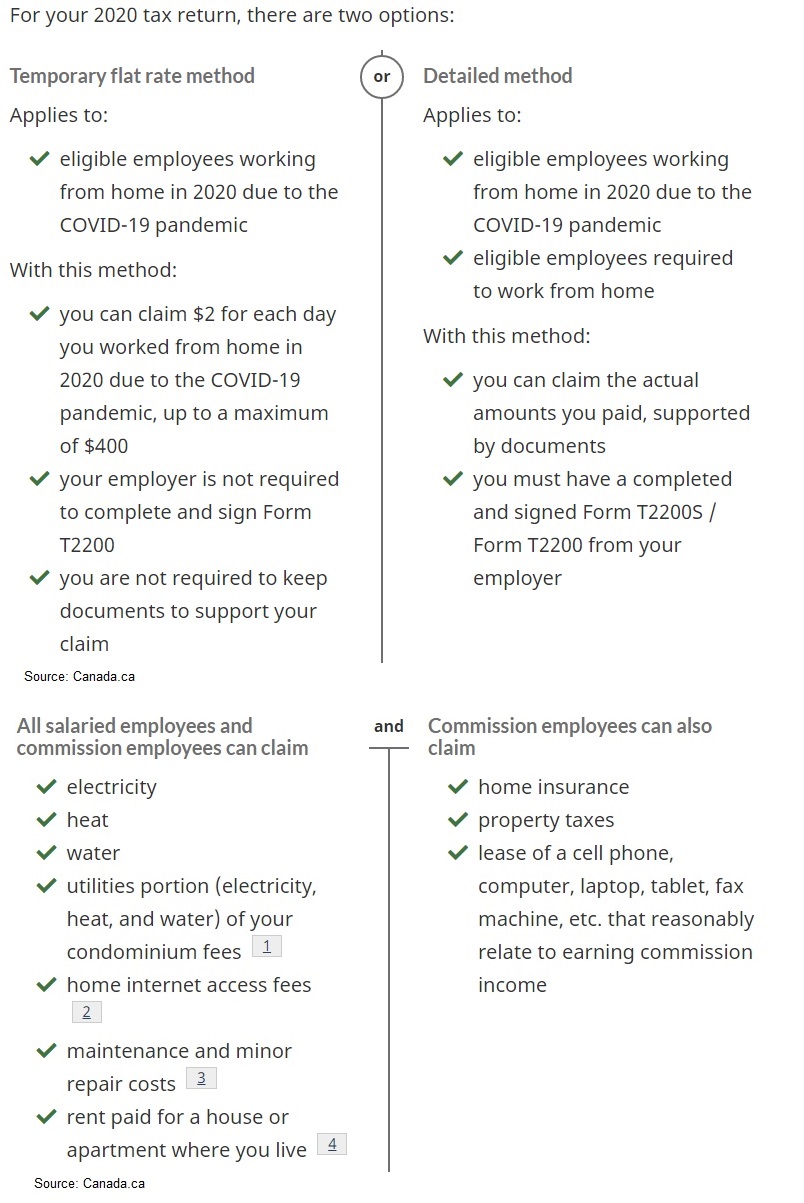
The Covid pandemic has led some employees to work from home, which has required a dedication of utilities, internet, and physical space in their homes for the purpose of work. This year, the government has provided two methods for Canadians to claim home office expenses. The methods differ in employment eligibility, complexity, qualified expenses and the supporting documentation required. We encourage clients to review with a qualified tax advisor or to thoroughly review the details on the CRA’s website. The two methods are summarized below.
Climate Action Incentive – Line 45110
While the Climate Action Incentive (CAI) was first made available to residents of Ontario during the 2018 tax year, I have come across many clients who have missed this credit. The federal carbon tax can be felt by Canadians through their home heating bills or when they fill up at the fuel pumps. This was meant to encourage people across the country to make “greener” choices to combat climate change. However, certain provinces do not have plans and policies addressing climate change and, therefore, residents of those provinces are entitled to get back a portion of the tax collected.
Unlike other credits, the entitlement of the CAI does not involve one’s income. Rather it is calculated based on what the province believes what an individual or family would spend in extra costs. For Ontario, the basic claim amount for an individual is $300 and a family of four could claim up to $600. Tax filers should refer to the government website for eligibility and further details.
We hope everyone has a smooth tax reporting season. We are here to assist you and your qualified tax accountant with any missing forms and slips. Contact your advisor for further information.
Investment Advisors are acting as Financial Security Advisors of RBC Wealth Management Financial Services Inc. RBC Wealth Management Financial Services Inc. is licensed as a financial services firm in the province of Quebec. The strategies, advice and technical content in this publication are provided for the general guidance and benefit of our clients, based on information believed to be accurate and complete, but we cannot guarantee its accuracy or completeness. This publication is not intended as nor does it constitute tax or legal advice. Readers should consult a qualified legal, tax or other professional advisor when planning to implement a strategy. This will ensure that their individual circumstances have been considered properly and that action is taken on the latest available information. Interest rates, market conditions, tax rules, and other investment factors are subject to change. This information is not investment advice and should only be used in conjunction with a discussion with your RBC advisor. None of the Companies, RMFI, RBC WMFS, RBC DI, Royal Bank of Canada or any of its affiliates or any other person accepts any liability whatsoever for any direct or consequential loss arising from any use of this report or the information contained herein