

Canada has urgent and challenging energy choices to make. We will need to rapidly scale power generation to service the needs of a growing economy, while simultaneously reducing net-carbon emissions to zero by 2050 to meet our climate targets. Given the current technological outlook, there is no single energy source that can meet those competing demands. But one thing is clear: nuclear power can be a key part of that lower-emissions future — and an increasingly promising option is to commercialize small modular reactors (SMRs).
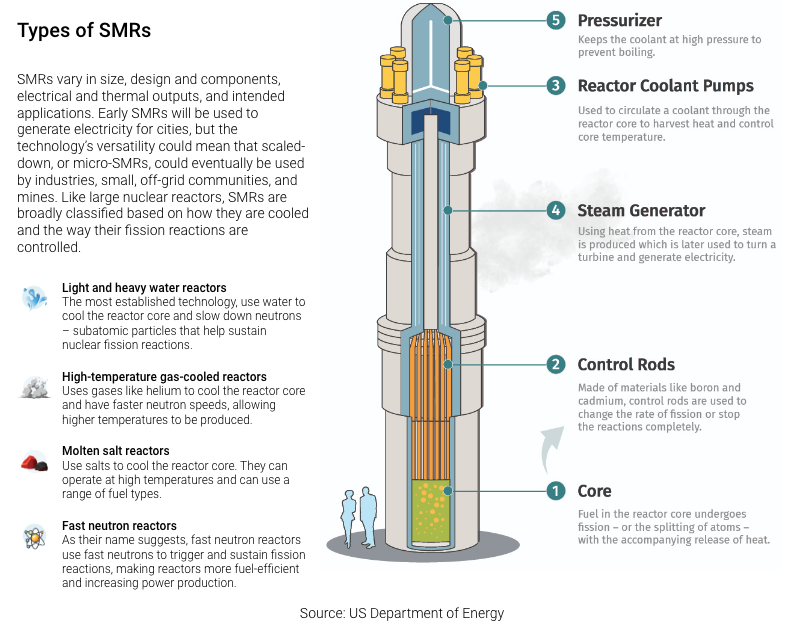
SMRs are more adaptable versions of today’s large-scale reactors and could solve many of the issues facing the nuclear industry. While most SMRs are still on the drawing board, they promise to reduce the costs of construction and operations, expand the range of applications across the economy, and potentially improve safety factors. If commercialized successfully, SMRs could bring new, non-emitting sources of electricity to big cities and remote communities, while providing flexibility to key Canadian industries that now power production processes with fossil fuels.
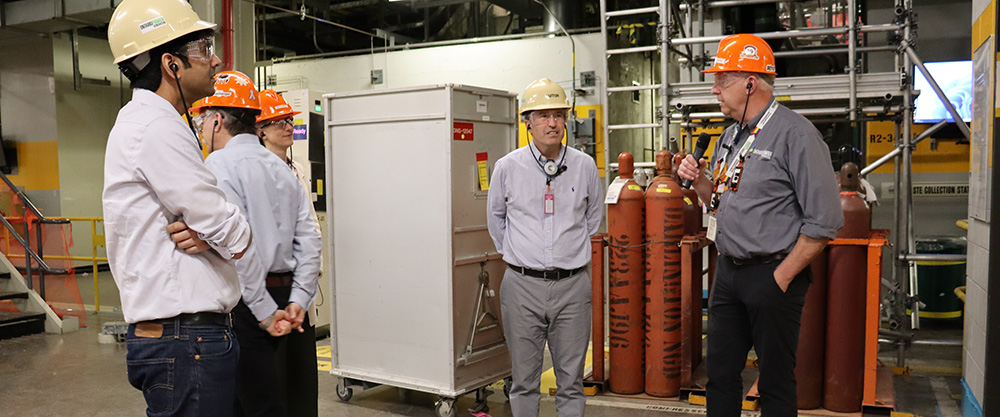
Darlington Nuclear Generating Station
Vivan Sorab, Senior Manager, Clean Technology RBC (Left), John Stackhouse, SVP, Office of the CEO RBC (Middle), Chuck Lamers, Senior Communications Advisor (Right)
The repercussions of SMRs could be far-reaching, with the global SMR market projected to reach $150 billion to $300 billion annually by 20401. Given the country’s seven decades of success in nuclear energy, Canada starts from a position of strength. SMRs could revitalize Canada’s nuclear industry, allowing us to export our talent and proven expertise to a world that is committed to triple nuclear power by 20502. Several countries including the U.S. and Britain have announced major public-private partnerships to capture those opportunities.
Canada has already taken an early lead in deploying a new generation of SMRs. One such reactor—GE-Hitachi BWRX-300—is close to the start of construction at the Darlington Nuclear Generating Station east of Toronto. That single SMR, the first of four that will be built at Darlington, could eventually provide electricity for 300,000 homes3. Other SMRs in various stages of licensing across the country could eventually power industrial facilities and remote mines and replace diesel in isolated communities.
To optimize the drive to net zero, Canada has formulated a national plan to develop and commercialize SMRs. In 2018, Ottawa created a coalition drawn from various levels of government, Indigenous communities, academia, power utilities and other industries to draw up a coordinated Small Modular Reactor Roadmap4. This was followed by an SMR Action Plan in 20205. To remain at the forefront of a potential SMR revolution, Canada must seek further ways to finance and regulate the development and commercialization of reactors. No one expects that will be straightforward. But an effective rollout of a nationwide plan to deploy SMRs promises an adaptable new energy source for the country, and a powerful catalyst for Canada’s transition to a greener economy.
Key findings





What is an SMR?
Nuclear energy has been used to produce carbon-free electricity since the 1950s, providing stability and diversity to national power grids. In addition to large-scale plants, small, bespoke nuclear reactors have been used to power submarines, aircraft carriers and planetary spacecraft. Some small reactors have been installed inconspicuously for research in national laboratories or university campuses, like McMaster University in Hamilton6 and the Royal Military College of Canada in Kingston7.
A strategic moment for Canada
SMRs could be a significant part of Canada’s future energy mix. How big a share depends in part on how quickly SMRs can be developed and deployed. Given the current technological outlook at least, SMRs have several advantages compared to the other main energy sources.
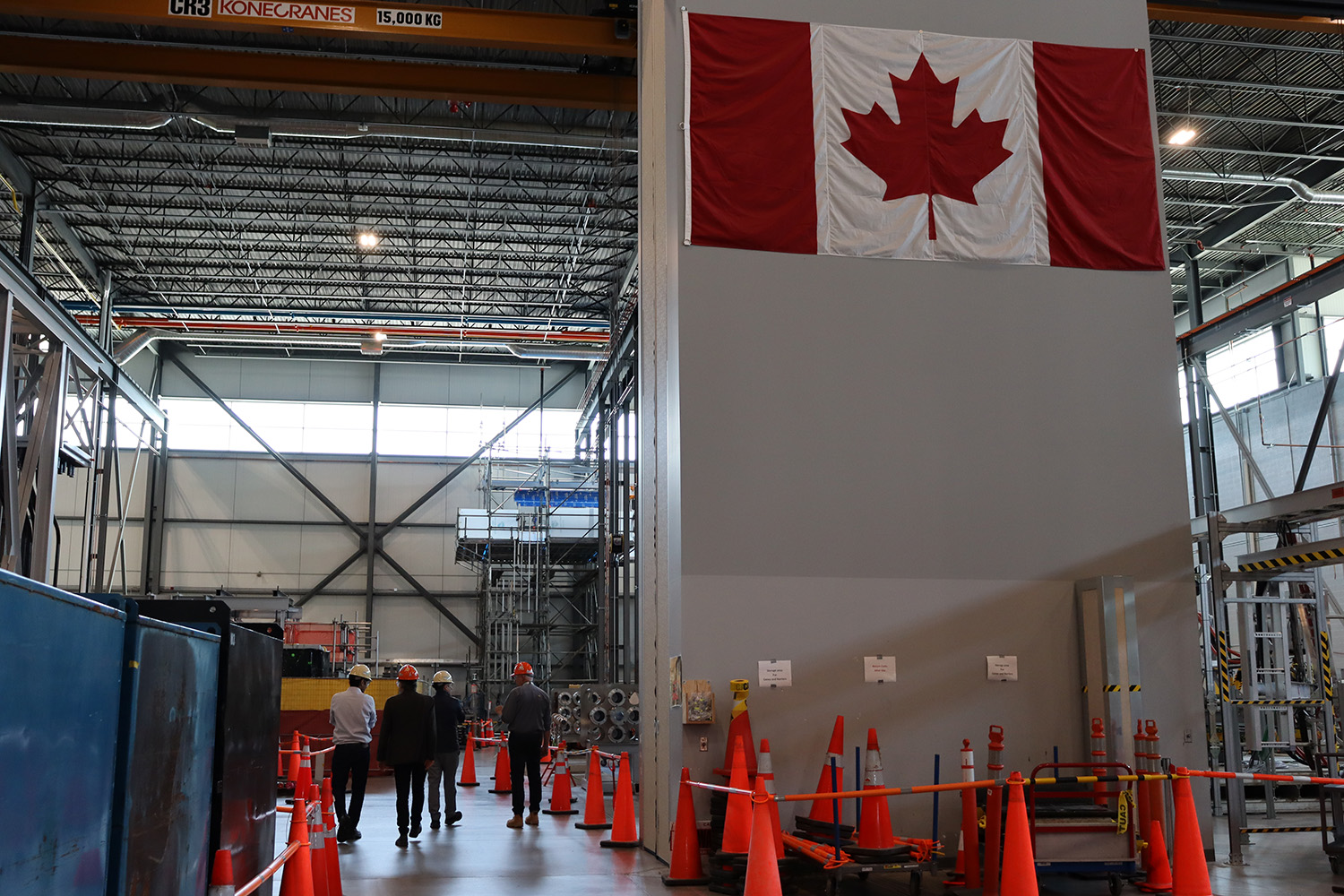
Darlington Nuclear Generating Station
Hydroelectric projects have been a mainstay of the Canadian energy landscape, but big projects are not possible or viable in many parts of the country, their massive expense, land impact, and the lack of new, quality resources make the case for new dams challenging. Prolonged droughts may challenge their reliability.
Renewables such as wind and solar provide relatively inexpensive electricity compared to nuclear options. But that power is intermittent, dependent on when the sun shines and the wind blows, which means renewables generally need to be backstopped by expensive batteries or emissions-intensive natural gas.
Natural gas plants retrofitted or built with carbon capture and sequestration (CCS) could provide relatively clean and reliable power. But on the drive to net zero, they will largely be limited to geographies where emissions can be captured and stored underground (mostly Western Canada), in a process that often comes with a hefty price tag and uncertainties in economics and commercialization potential.
Nuclear energy, to reach its potential, must overcome a track record that has included cost overruns, long project timelines, and low social acceptance in parts of the country such as British Columbia and Nova Scotia. There also continue to be concerns around nuclear safety and waste management. Nuclear is the world’s second-highest source of zero-emissions power after hydroelectric dams but its share of global electricity production has dropped from 17% in the 1990s to 9% today (with natural gas, coal and renewables filling the gap21.)
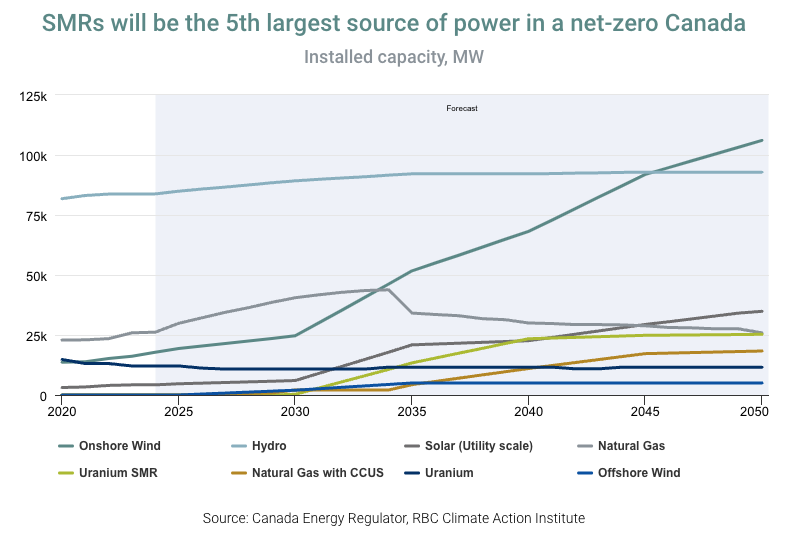
SMRs, if commercialized, could accelerate nuclear project timelines, lower costs, and bring nuclear to geographies with grids too small to accommodate large power plants. Under a net-zero scenario from the federal Canada Energy Regulator, the country will need 25 gigawatts of SMR capacity—equivalent to about 85 grid-scale SMRs—by 2050, which would provide 7% of Canada’s power capacity. Under that scenario, onshore wind would account for 30% of the total, hydro 26%, utility-scale solar 10%, abated natural gas 7% and large nuclear 3%22. By leveraging SMRs as a source of non-emitting power, Canada could save 41 megatons of emissions, on average, annually between 2030 and 2050 relative to unabated natural gas generation23.
SMR applications
Grid-scale power generation
Canada’s electricity supply is one of the world’s greenest, with 81% of its generation fed by hydro, nuclear, and wind and solar power24. But there is no easy solution that would decarbonize the 19% of Canada’s grid that still relies on fossil fuels.
Successful deployment of SMRs would unlock a new source of carbon-free power for Canada’s electrical grids. SMRs scalability make them suitable for grids of varying sizes and location. And with technological, social, and commercialization issues currently limiting growth of other energy options in Canada, SMRs are expected to be competitive with other sources of power on a cost-of-generation basis25.

Industrial processes
Reducing the 75 megatons of CO2 equivalent emitted annually from Canada’s industrial sector26 is a net-zero imperative. SMRs can help Canadian industries decarbonize by providing uninterrupted, non-emitting electricity and heat to commodity producers. In the longer term, SMRs could be used to produce low-emissions hydrogen and synthetic fuels that may aid in the carbon-intensive steel, cement and petrochemical industries.
The SMRs could be used at individual sites for specific applications — like the chemicals and pulp and paper sectors to create steam currently produced by burning natural gas. These applications would provide a competitive edge to Canadian companies whose customers need lower-carbon materials.
But deploying SMRs will be difficult in certain industrial processes given existing technologies. Steelmaking in blast furnaces and cement manufacturing require temperatures at or above 1,000 Celsius, which current SMR designs would not be able to produce27.
Mining
The mining sector produces 2% of national emissions28, but has made steady progress on decarbonization. For instance, nickel miners are converting their mine vehicle fleets to electric29 and pursuing projects that use tailings to capture CO2 30.
SMRs may be able to push many other mining operations closer to zero emissions—particularly if the sites are beyond the reach of electricity transmission infrastructure—by displacing diesel generators and providing electric power for mine vehicles.
Mining The mining sector produces 2% of national emissions28, but has made steady progress on decarbonization. For instance, nickel miners are converting their mine vehicle fleets to electric29 and pursuing projects that use tailings to capture CO2 30. Read More SMRs may be able to push many other mining operations closer to zero emissions—particularly if the sites are beyond the reach of electricity transmission infrastructure—by displacing diesel generators and providing electric power for mine vehicles. But complexity varies and some mines will be more challenging to decarbonize. Canada’s largest and heaviest carbon-emitting mines are the massive iron ore operations in Newfoundland and Labrador, Quebec and Nunavut. These operations will continue to rely on fossil fuels in the near-term because there are no alternatives at present that can produce the high temperatures (at least 1,300 C) they need to process ore31.

Oil sands
Decarbonizing this carbon-intensive sector is arguably Canada’s greatest climate challenge. Oil sands extraction is responsible for 12% of national emissions32, and consumes 30% of the Canada’s natural gas output33, which it burns in boilers to produce steam for in-situ production techniques..
If SMRs can be commercialized, they will be a strong contender to lower emissions in the oil patch. By producing high quality, high temperature steam, SMRs can replace natural gas boilers at in-situ oil sands facilities, cutting off emissions at their source. Unlike carbon-capture technologies, SMRs would not require further infrastructure such as CO2 pipelines and underground storage downstream. By deploying a large SMR to the highest emitting facilities, oil sands producers could theoretically displace natural gas emissions at a capital cost of $1.6 billion to $2.6 billion. For smaller facilities, six or seven micro-SMRs may be able to abate emissions at a capital cost of $300 million to $700 million34.
Preparing for the age of small
Canada has been a global leader in the peaceful use of nuclear energy for over 75 years. Early research at labs in Montreal and Chalk River helped lead to breakthroughs in the industry and development of the safe and versatile CANDU reactor technology, which has been used across eastern Canada and exported to six other countries. The Pickering, Bruce and Darlington nuclear generating stations have been strategic drivers through the 1990s, producing important supply chains in Ontario and employing tens of thousands of skilled workers. While fiscal tightening and global nuclear-safety fears arrested the industry’s growth in the 1980s and 1990s, decisions to reinvest in Bruce and Darlington have since brought the sector new life.
The promise of SMRs now presents Canada with new choices about our nuclear future. If SMRs can be developed and commercialized quickly and cost-effectively, they can help Canada meet growing demand for electricity and its commitment to reach Net Zero by 2050. But we will need to move faster. For Canada to achieve Net Zero emissions by 2050, 93% of SMR capacity must come online in the 2030s, more than twice as fast as Canada achieved its conventional nuclear capacity buildout between the 1970s and 1990s57.
The good news is that Canada is taking an early lead in deploying SMRs. The GE-Hitachi BWRX-300 prototype is nearing construction at Darlington, while other SMRs are in various stages of licensing. Success could unlock a new source of energy for non-emitting baseload power for Canada’s grids, and off-grid power for remote locations. Success will also position Canada to be an important exporter of SMR components and expertise.
Canada will need to be nimble. Nuclear power is by far our most complicated source of electricity. And the commercialization of advanced approaches to nuclear, through SMRs, will require a diverse mix of capital, skills, fuel supplies and public policy. That, in turn, will require a coordinated national approach to make this potentially transformative technology a key part of our energy future.
References
- Natural Resources Canada: Canada Outlines Next Steps for Progress on Small Modular Reactor Technology
- Natural Resources Canada: COP28: Declaration to Triple Nuclear Energy (2023
- Ontario Power Generation: OPG working to deploy SMR fleet to help power Ontario’s clean energy future
- Natural Resources Canada: Canadian SMR Roadmap
- Canada’s Small Modular Reactor (SMR) Action Plan
- McMaster University: McMaster Nuclear Reactor
- Nuclear facility – Royal Military College of Canada SLOWPOKE-2 research reactor
- World Nuclear Association: Small Nuclear Power Reactors
- Rolls-Royce Small Modular Reactors
- Chemical and Engineering News: Can small modular reactors at chemical plants save nuclear energy?
- The NEA Small Modular Reactor Dashboard: Second Edition
- World Nuclear Association: Small Nuclear Power Reactors
- Tennessee Valley Authority: Advanced Nuclear Solutions
- UK Research and Innovation: UK government invests £215 million into small nuclear reactors
- Natural Resources Canada: Canada Launches New Small Modular Reactor Funding Program
- Canada Infrastructure Bank: CIB commits $970 million towards Canada’s first Small Modular Reactor
- University of New Brunswick: UNB researchers are exploring how to power the future with small modular reactors
- CBC: 7 First Nations in N.B invest in small modular nuclear reactors
- Government of Saskatchewan Funds Microreactor Research
- Energy Institute: Statistical Review of World Energy 2023
- Canada Energy Regulator: Canada’s Energy Future
- RBC Climate Action Institute Analysis
- Canada Energy Regulator: Canada’s Energy Future
- RBC Climate Action Institute Analysis
- Canadian Climate Institute: Early Estimate Of National Emissions
- Nuclear Energy Agency: The NEA Small Modular Reactor Dashboard: Second Edition
- Canadian Climate Institute: Early Estimate Of National Emissions
- Electric Autonomy Canada: Vehicle orders bring Glencore’s all-electric Onaping Depth mine a step closer to fruition
- Canada Nickel: Canada Nickel Announces Carbon Storage Testing Results Better than Anticipated; Integrated Feasibility Study Expected in September
- RBC Climate Action Institute Analysis
- Canadian Climate Institute: Early Estimate Of National Emissions
- Canada Energy Regulator: Oil sands use of natural gas for production decreases considerably in early 2020
- RBC Climate Action Institute Analysis
- Lovering et al. (2016): Historical construction costs of global nuclear power reactors
- US Energy Information Administration: First new U.S. nuclear reactor since 2016 is now in operation
- POWER: A Closer Look at Two Operational Small Modular Reactor Designs
- RBC Climate Action Institute Analysis
- Canada’s Energy Future 2023: Energy Supply and Demand Projections to 2050
- RBC Climate Action Institute Analysis
- ibid
- Natural Resources Canada: Canada Supports Indigenous Advisory Council for SMR Action Plan
- CBC: 7 First Nations in N.B invest in small modular nuclear reactors
- First Nations Major Project Coalition: Primer on Nuclear Energy, SMRs and First Nations
- GE Vernova: Tennessee Valley Authority, Ontario Power Generation and Synthos Green Energy Invest in Development of GE Hitachi Small Modular Reactor Technology
- RBC Climate Action Institute analysis.
- World Nuclear Association: World Uranium Mining Production
- World Nuclear Association: Conversion and Deconversion
- BC Laws: Clean Energy Act
- Nova Scotia Legislature: Energy Reform (2024) Act
- Environics Research and Canadian Nuclear Association: Public Attitudes To Nuclear Power
- Reuters: Britain plans to boost nuclear workforce
- Fasken: A Nascent Renaissance – Part II: Confronting Nuclear Energy Fuel Supply Chain Challenges
- Ontario Power Generation: OPG selects suppliers for first fuel contracts for its Small Modular Reactors
- World Nuclear Association: Uranium Enrichment
- OPG celebrates green light for Pickering Refurbishment. Here’s what’s next
- RBC Climate Action Institute Analysis
This article is intended as general information only and is not to be relied upon as constituting legal, financial or other professional advice. A professional advisor should be consulted regarding your specific situation. Information presented is believed to be factual and up-to-date but we do not guarantee its accuracy and it should not be regarded as a complete analysis of the subjects discussed. All expressions of opinion reflect the judgment of the authors as of the date of publication and are subject to change. No endorsement of any third parties or their advice, opinions, information, products or services is expressly given or implied by Royal Bank of Canada or any of its affiliates.