

A word from Mike
Hello,
A range of developments continues to shape the investment landscape, with potential implications for the macro outlook. I discuss recent corporate earnings updates, monetary policy, and U.S. political risk in more detail below.
Corporate earnings in focus
U.S. earnings season is well underway, with more than a quarter of S&P 500 companies reporting Q4 2025 results so far. Overall results have been encouraging, with companies beating consensus profit estimates near their historical average rate. That said, elevated valuations suggest a fair amount of optimism may already be reflected in prices.
Despite broadly upbeat results, the pace of positive profit surprises has moderated somewhat relative to prior quarters, leading to more muted or negative share price reactions in some cases. This dynamic reinforces the importance of sustained earnings delivery and guidance for the coming quarters, particularly in an environment where above-average valuations leave markets potentially more sensitive to disappointments.
Investor focus also seems to be incrementally shifting toward the quality of earnings as it relates to artificial intelligence (AI) investment. Markets are becoming more discerning, favouring companies that can demonstrate tangible returns on AI spending alongside durable cash flows, strong balance sheets, and consistent shareholder returns via dividends and share buybacks—attributes that can enhance resilience should market conditions become more challenging.
North of the border, earnings season is still in its early stages. Large Canadian banks reported solid results late last year, and more companies are set to report in the weeks ahead. In addition to the banks, the Materials and Info Tech sectors are likely to garner attention amid supportive commodity prices and AI-related opportunities and risks. Consensus expectations point to high-single-digit earnings growth in Q4 2025 for the S&P/TSX Composite and double-digit growth in 2026.
Central bank decisions
Both the Bank of Canada (BoC) and the Federal Reserve (Fed) left interest rates unchanged at their latest meetings. In Canada, expectations of a modest rebound in the labour market and economic growth have allowed BoC to remain patient. While officials acknowledged ongoing uncertainty around trade policy, they emphasized a willingness to adjust rates should the outlook materially change.
Meanwhile, the BoC continues to anticipate a return to trend-level growth over the medium term. With the economic impact of tariffs to date more limited than initially feared, growth forecasts may ultimately prove conservative. However, ongoing trade tensions and upcoming USMCA renegotiations in the summer remain wildcards that I will continue to monitor. In response to President Trump’s recent tariff rhetoric over Canada’s relations with China, Prime Minister Carney emphasized that Canada was looking to diversify trade rather than pursue broad-based free-trade agreements.
In the U.S., the Fed’s decision to pause its rate-cutting cycle reflected confidence in the underlying strength of the U.S. economy, even as inflation remains above target. Fed Chair Powell reiterated the central bank’s commitment to both price stability and full employment, reinforcing a data-dependent approach. Taken together, the tone suggests that future rate cuts, when they occur, are likely to be gradual and carefully calibrated.
Persistent U.S. policy uncertainty
Despite continued economic resilience, U.S. policy uncertainty has resurfaced. Recent events have renewed concerns around tariff policy and domestic stability, with heightened political tensions around immigration enforcement complicating efforts to finalize federal funding legislation. What was previously expected to be a routine funding vote is now facing resistance in the Senate, as Democratic Senators have cautioned that they may withhold support for the bill if it includes funding for the Department of Homeland Security, raising the risk of another partial federal government shutdown, potentially as early as this weekend.
Although a shutdown—if it occurs—would likely weigh on economic activity in the short term, history suggests these disruptions tend to be temporary, with lost output largely recouped once the government reopens. From a market perspective, persistent policy uncertainty has coincided with a softer U.S. dollar and renewed strength in precious metals. While political headlines could contribute to near-term volatility, I believe they are unlikely to alter the broader trajectory of the U.S. economy, which continues to expand at a steady pace.
Takeaway
Corporate earnings and underlying economic fundamentals remain broadly supportive of equity markets, even as policy uncertainty and elevated expectations introduce the potential for short-term volatility. While market pullbacks can be uncomfortable, maintaining a long-term perspective remains essential. In this environment, I believe staying invested—while remaining attentive to evolving risks—continues to be a prudent approach.
Highlights
Crosscurrents buffet U.S. dollar and Treasury market
Global and domestic headlines have put the focus squarely on U.S. sovereign assets. We look at what steps investors should take in this time of shifting economic messages.
Regional developments: Bank of Canada maintains its key interest rate at 2.25%; From “Liberation Day” to the S&P 500 hitting 7,000; Euro strength not an issue so far, plus key results from the corporate earnings season; Possible intervention to prop up the yen?
Please take some time to review the Global Insight Weekly.
Canadian inflation climbed to 2.4% in December
Statistics Canada noted that Ottawa’s decision in mid-December 2024 to remove the GST for two months from some goods led to the YoY difference. It fueled, for instance, an 8.5% annual increase in the cost of dining out. Overall, grocery store prices rose 5% YoY in December (this followed a 4.7% annual increase in November). Coffee prices were up more than 30% and beef was up 16.8%. Helping to offset the increases, gasoline prices were down 13.8% due to an over-supply of crude oil globally.
CUSMA is a source of "important risk" to Canada's outlook
The Bank of Canada maintained interest rates at 2.25%, but noted that uncertainty around its forecast is heightened due to U.S. trade policy shifts and geopolitical risks. Governor Tiff Macklem also cautioned that Canada's efforts to diversify trade won't completely offset "structural" damage by the U.S. trade war. Meanwhile, Prime Minister Mark Carney said Canada has completed its internal review of the trilateral Canada-U.S.-Mexico trade agreement and his government is “ready to sit down” with the other two partners soon.
Canada’s three biggest cities saw a drop in immigration
Toronto, Vancouver and Montreal attracted 46% of new immigrants collectively by mid-2025—that’s down from 57% just before the pandemic, Statistics Canada data shows. Toronto and Vancouver—the two cities facing an acute housing shortage—have also seen immigration levels drop from a combined 62.4% in 2002 to 36.2% by mid-2025. The declines can also be explained by the precipitous drop in international students, a decline in immigration level, and some newcomers settling away from key city centres.
American firms are pulling back from their pandemic hiring spree
Amazon, UPS, Home Depot and Dow Chemical are among companies planning layoffs as they face economic uncertainty and deploy AI technologies. U.S.-based employers announced 1.2 million job cuts in 2025, the highest annual figure since 2020, led by tech and warehousing sectors. While the U.S. labour market remains strong, hiring has slowed down. Firms also are investing billions in AI, leaving less for labour. AI was responsible for 5,000-10,000 net job losses in industries most exposed to it in 2025, according to one estimate.
China’s birth rate plunged to a record low
In 2025, China’s birth rate (5.63 per 1,000 people) fell to its lowest level since the Communist Party took power in 1949. The result, when combined with the highest death rate (8.04 per 1,000) in nearly 50 years, is a population in decline. Overall, China’s population was down by about 3.4 million last year to 1.4 billion. That has serious implications for the world’s second largest economy, which is already suffering from a declining workforce due to an aging population.
The EU and India struck a free trade deal after two decades
The “mother of all deals” creates a free trade zone of two billion people and is expected to double EU goods exports to India by 2032. The rapid conclusion of the deal reflects the EU’s focus on reducing reliance on the U.S. and forging closer ties with India and China. Meanwhile, Canada and India also plan to expand energy trade, with Ottawa committing more crude oil and liquefied natural gas exports, while New Delhi agreed to boost refined petroleum exports to Canada.
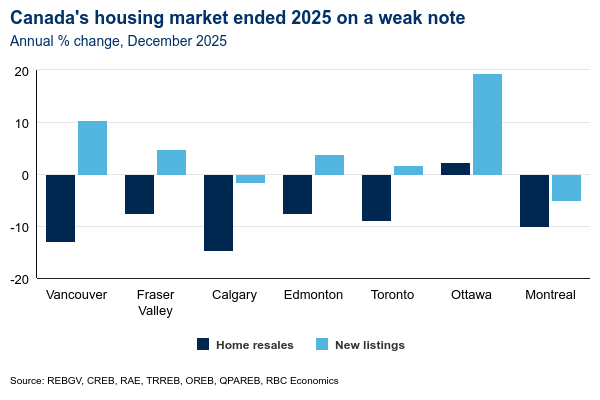
Chart of the day
Interesting tidbits
-
Canada could ban social media for children under 14. Plans are reportedly in the works to include the ban in the government’s new online harms bill, which is expected to be introduced in the coming months. A law banning social media platforms for children under 16 took effect last month in Australia. The Canadian government is also exploring rules to shield those under 18 from targeted ads. While experts support the restrictions, they warn a ban alone won’t address broader issues like harmful algorithms or lack of guardrails.
-
91 minutes. The time it took U.S. rock climber Alex Honnold to climb the 1,667-feet Taipei 101 tower without ropes or harness. The live event was broadcast by Netflix.
-
An autonomous-vehicle startup raised US$750 million to fund its growth. Toronto-based Waabi will use what is thought to be the largest funding round in Canadian tech history to continue its expansion into autonomous long-haul trucking in partnership with Uber Freight. It also announced that it will deploy at least 25,000 self-driving taxis in partnership with the ride-hailing giant at some point down the road—but the company didn’t reveal a launch location or date. An additional US$250 million investment from Uber will go to support development.
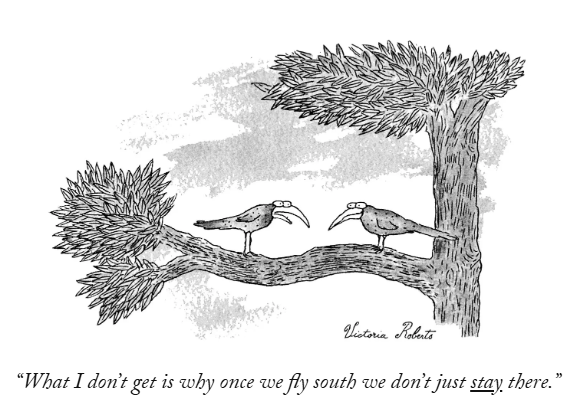
Today’s funny
REMINDER: Most of my new clients come to me via word of mouth as I don’t advertise or engage in marketing programs. Please keep my team in mind if you hear of anyone with over $1 million in investable assets who is in need of wealth management services.
This information is not investment advice and should be used only in conjunction with a discussion with your RBC Dominion Securities Inc. Investment Advisor. This will ensure that your own circumstances have been considered properly and that any action is taken based upon the latest available information. The strategies and advice in this report are provided for general guidance. Readers should consult their own Investment Advisor when planning to implement a strategy. Interest rates, market conditions, special offers, tax rulings, and other investment factors are subject to change. The information contained herein has been obtained from sources believed to be reliable at the time obtained but neither RBC Dominion Securities Inc. nor its employees, agents, or information suppliers can guarantee its accuracy or completeness. This report is not and under no circumstances is to be construed as an offer to sell or the solicitation of an offer to buy any securities. This report is furnished on the basis and understanding that neither RBC Dominion Securities Inc. nor its employees, agents, or information suppliers is to be under any responsibility or liability whatsoever in respect thereof. The inventories of RBC Dominion Securities Inc. may from time to time include securities mentioned herein.