

Digital assets get a bad rap for wild price swings. Despite this, they’re quickly becoming a real part of modern finance, especially with the Trump administration pushing smart regulations. In the interest of staying ahead of technological trends, we’ve been adding measured exposure in client portfolios for a while now. Below is our attempt at offering a high-level overview that answers the top questions we've been getting in our client conversations. Bottom line: Crypto deserves attention in your portfolio, but how you invest in it matters.
What Are Digital Assets?
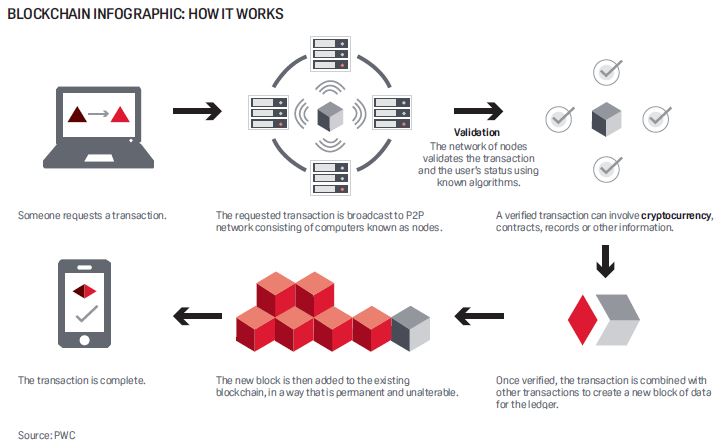
Think of digital assets as money or property that only exist online. They’re built on blockchain—a shared, tamper-proof record kept on thousands of computers instead of one bank. No middleman, no fakes, instant proof. This foundation makes digital assets not just speculative tools, but enablers of a more efficient, friction-free economy. For those who appreciate visuals, we find the infographic below from PWC to be quite helpful in demonstrating the core concept.
Bitcoin & Ethereum: The Big Two
A key subset of digital assets are cryptocurrencies, which function as the “money” for the blockchains described above. Bitcoin and Ethereum dominate the crypto landscape, representing over 60% of the market's value. Think of Bitcoin as digital gold: a finite amount will ever exist so it’s simple, scarce, and great for holding value over time. Ether is more like digital copper; it has a wide variety of uses that can power data sharing, payments, and other tasks via “smart contracts” that can be programmed to run automatically.
What Can You Do with Digital Assets?
The digital asset space extends beyond the daily swings of Bitcoin and Ethereum. Its real promise lies in practical applications that address longstanding inefficiencies in finance and society. Below are some high-level categories we're watching:
-
Payments & Remittances: Send money across borders in seconds, not days, for pennies. Stablecoins – i.e. cryptocurrencies pegged to traditional currencies like the U.S. dollar – exemplify this, offering near-instant settlements with minimal intermediaries for safer, more reliable transactions.
-
Decentralized Finance: Lend, borrow, or earn interest without a bank. This saves on fees and allows easier access to financial services.
-
Tokenization: Turn real estate or stocks into digital shares anyone can buy a piece of. Again, this lowers fees and makes investing more accessible.
-
Supply Chain and Identity Verification: Track products or prove you’re you. This is especially useful as AI grows and the need to verify human activity increases.
Why Is the Space Attractive Now?
The digital asset ecosystem has been maturing for some time, but recent developments have added the structure necessary for us to consider this a legitimate space for investment.
The most important is regulation. The GENIUS Act (July 2025) sets safe, simple rules for stablecoins (crypto tied to the dollar). This added guardrails the industry needed to gain credibility and structure. US Treasury Secretary Scott Bessent has been vocal on the upside potential of this area, noting that the stablecoin market – currently around $250 billion – could exceed $2 trillion by 2028. We anticipate the administration will build on this with the CLARITY Act, another piece of crypto legislation expected to be passed over the next few months. Investors should expect this to be a further positive catalyst in the space over the months to come.
Big companies are capitalizing on the above by jumping in wholeheartedly. For instance, Blackrock CEO Larry Fink has trumpeted the role of tokenization as the next leg of financial innovation in the asset management industry; you can expect the topic of tokenized stocks and bonds to become a hot topic over the next few years. Outside of finance, Microsoft CEO Satya Nadella recently described how crypto was being embedded into their cloud services to secure data flows. These are just two of many recent examples of business leaders noting their intention to further integrate digital assets into their strategies. Savvy investors should pay attention.
What Is Our Preferred Method of Portfolio Exposure? Are We Buying Cryptocurrencies?
At this stage, we're not in the business of picking winners in the crypto arena. Directly purchasing individual cryptocurrencies like Bitcoin and Ethereum can make sense for certain risk-tolerant investors. But the space is young and crowded with thousands of tokens, many of which may not survive. For this reason, at RBC we are still unable to purchase coins directly without strict restrictions. In any case, for most of our clients, individual cryptocurrencies are often too volatile or speculative to warrant a core allocation. Instead, our focus is on capturing the tailwinds from the growth of the sector overall.
We favor indirect exposure through the infrastructure of digital assets. This means investing in established companies that provide the "picks and shovels" – think brokers, payment processors, and semiconductor firms enabling secure computing – rather than betting on any single crypto price. As the ecosystem scales, these players stand to benefit from increased transaction volumes and network effects.
These positions are already some of our top performers this year. But we are keenly aware of the risk in this space. For this reason, we keep allocations small and selective to avoid big swings. Our clients can be confident we are on the lookout for companies that stand to benefit from this emerging asset class, but are equally vigilant about doing so without taking undue risk.