

Since the U.S. imposed tariffs on Canadian goods in April 2025, Canada has worked to diversify its export markets, reducing its dependency on its southern neighbour. The U.S. remains Canada’s largest trading partner but the tariffs have prompted a shift in export strategies, with an emphasis on strengthening ties with other countries.
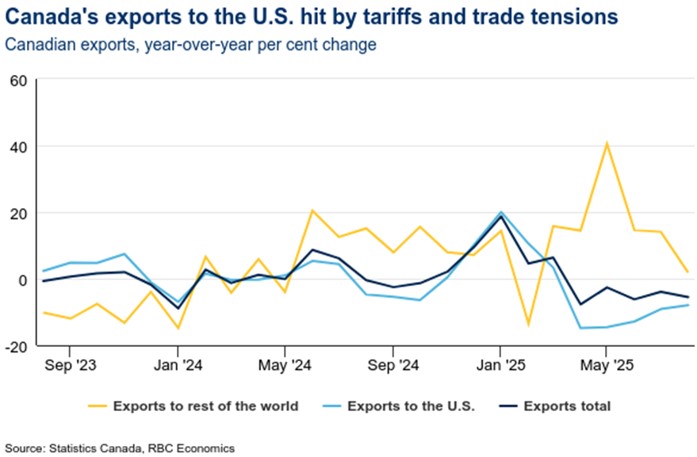
Since April, Canada has increased its shipments of gold to the United Kingdom, crude oil to the Netherlands, and other various goods to countries like China, Algeria, and Brazil. While exports of some products like pharmaceuticals and pork have declined due to lower demand from the U.S. and Asian markets, Canada has also seen a rise in exports of motor vehicles and parts, despite tariffs on the sector.
Shifting export destinations:
- United Kingdom: Increased exports of gold
- Netherlands: Increased exports of crude oil
- China: Increased exports of various products. (Note: China had imposed 70%+ retaliatory tariffs on canola seed and oil)
- Algeria: Increased exports of iron ore and wheat
- Brazil: Increased exports of potash
- Central and South America: Exports have increased by 13%
- Other European countries: Higher exports to Italy and Poland have been observed
Affected export products:
- Metals:
- Aluminum: Exports to the U.S. decreased by over 24%, with higher exports to the Netherlands, Italy, and Poland
- Gold: Exports have increased, particularly to the United Kingdom
- Motor Vehicles and Parts:
- Exports have declined overall due to production decreases
- There have been increases in exports of motor vehicles and parts despite the tariffs targeting the auto sector.
- Pharmaceuticals:
- Exports to the U.S. have decreased
- Pork:
- Lower shipments to Asian markets have contributed to a decline in exports
- Energy:
- Crude Oil: Increased exports to the Netherlands
- Potash: Increased exports to Algeria and Brazil, respectively
Canada's trade surplus with the United States narrowed significantly in April 2025 while its exports to countries other than the United States have increased. These trends are a part of a broader effort to diversify Canada's trade away from the U.S. market. Despite overall growth in non-U.S. exports, some specific markets experienced drops in specific quarters due to factors like Chinese tariffs on canola and reduced iron ore shipments to Japan. As investors, we should prepare for further headlines and volatility related to tariffs. Ultimately though, Canada's best defense is to expand their global trade relationships.