

In our past posts, we’ve followed Sarah as she built a solid financial foundation - creating a budget, setting up her investment accounts, and learning the basics of saving and investing. Now that she’s gaining confidence in managing her money, Sarah has started thinking about another key part of her financial life: debt.
Like many young professionals, she’s heard mixed messages. Is all debt bad? Should she avoid borrowing entirely? Or can debt be used as a tool to build wealth? The truth is, there’s good debt and bad debt and understanding the difference is essential for financial success.
Sarah is considering going back to school part-time to boost her career and dreams of buying a home. These are goals that often require borrowing but can bring long-term financial benefits.
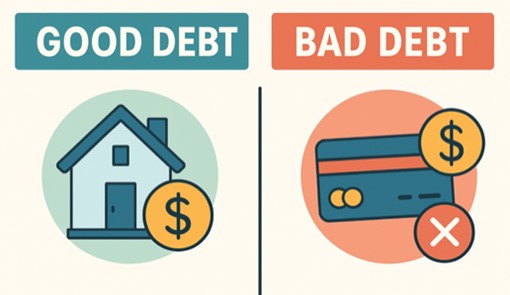
This is known as good debt: borrowing to acquire something that appreciates or generates income, like student loans, mortgages, or business financing. In these cases, debt becomes an investment in her future.
At the same time, Sarah knows how easy it is to fall into bad debt—using credit cards for impulse buys, takeout, or shopping sprees. These offer short-term satisfaction but can lead to lasting financial stress. High-interest debt, like unpaid credit card balances, can quickly spiral due to compounding interest and late fees, ultimately hurting her credit and limiting future financial options.
Using debt strategically, making payments on time, and keeping balances low (ideally under 50% of your credit limit) all contribute to building a strong credit history. A good credit score can open doors to better interest rates and future loan approvals, while a bad credit score can limit options and raise borrowing costs.
To avoid the trap of bad debt, Sarah builds new habits: she keeps her credit card balances well below 50% of her limit, sets up automatic, on-time payments, and only borrows for long-term goals like education and homeownership. She also learns how credit card interest (APR) works. By paying her balance in full each month, she avoids interest entirely; if not, interest is charged daily and adds up quickly.
Sarah also returns to a habit from earlier in her journey: paying herself first. With an automatic savings plan in place, her goals are funded before any spending, helping her stay committed to long-term saving while still enjoying life.
Just as she’s learned to budget and invest intentionally, Sarah now views debt the same way. Used wisely, it moves her forward—misused, it can hold her back. With every smart decision, she’s building both her wealth and confidence.
This information is not investment advice and should be used only in conjunction with a discussion with your RBC Dominion Securities Inc. Investment Advisor. This will ensure that your own circumstances have been considered properly and that any action is taken based upon the latest available information.
The strategies and advice in this newsletter are provided for general guidance. Readers should consult their own Investment Advisor when planning to implement a strategy. Interest rates, market conditions, special offers, tax rulings, and other investment factors are subject to change.