

As we begin a new year, its a natural time to reflect on where we’ve been and think about where we’re headed. While the calendar may have turned, the core principles of disciplined planning, diversification, and long-term perspective remain as important as ever.
Markets have continued to evolve, presenting both challenges and opportunities, and we remain committed to helping you navigate them with clarity and confidence.
Let’s jump right into today’s topics:
Table of Contents:
- 10 signs it’s time to revisit your financial plan
- Petrov Commentary
- What to expect in January?
- Key Date Contribution reminders
10 signs It’s Time to Revisit Your Financial Plan
- You’re thinking about selling your business.
- You are worried about how retirement will look like.
- You’re wondering how your children will manage wealth in the future.
- Your investments are scattered and are becoming a burden to manage.
- Your investments no longer match your comfort with risk.
- You recently bought or sold a home.
- A major life event has occurred: marriage, divorce, a new child, or a loss.
- Your income has changed: new job, raise, layoff, or career shift.
- Your spending has shifted: new debt, lifestyle changes, or reduced expenses.
- You’re thinking about the tax impact on your estate.
If one or more of these signs feel familiar to you, now is the time to call us to go over your financial plan.
Petrov Commentary
A new calendar year always creates the illusion of a “fresh start” for markets. In reality, markets don’t reset on January 1. Human psychology does, sometimes.
2025 reminded investors of something uncomfortable but timeless: uncertainty is not an anomaly, it’s the constant. Geopolitics, inflation narratives, rate expectations, and AI-driven enthusiasm all competed for attention. Much of the noise (I don’t call it news) was compelling, but very little of it was actionable.
A few of the main themes I am watching as we enter 2026:
- AI: The world is reshaping in real-time, and the conversation is shifting from potential to profitability. Markets are becoming more selective as capital spending meets earnings reality. Industry leaders are sending eye-watering amounts of capital on AI and this will create revenue and cost-cutting opportunities simultaneously.
- Geopolitics: Markets have always co-existed with geopolitical tension such as what we see today. In the short-term, unexpected events could trigger volatility but we know that stock prices are tightly correlated to earnings.
- Technology: There are winners and losers with AI. The challenge is identifying which Tech companies benefit from it, and which companies may be threatened (i.e.. Software).
- Financials: Sensitive to the shape of the yield curve and credit conditions. Watching the direction of interest rates.
- Energy: Supply discipline continues to support prices, while geopolitical developments remain a key swing factor.
- Industrials: Markets focused less on back-log and more on execution.
- Consumer: Spending remains stable, but it has become more selective. The gap between essential and discretionary spending widening.
I attended an annual Portfolio Management Conference to kick off the year. Many institutional asset managers and thought leaders presented their perspectives. The sentiment is overall optimism as AI dominated the conversation. My goal is to stay level-headed and always keep in mind that markets have likely priced in much of what we already know.
We do not attempt to predict headlines. We build portfolios that can withstand them.
That means diversification that actually manages risk, investing only in high quality businesses, discipline when emotions run high, and an acceptance that volatility is not a flaw in markets. It is the price of long-term returns. There will inevitably be periods of volatility that will come and go, and we can’t predict what and when the catalyst will be and how long they will last. Those periods of discomfort will not be signals to abandon a plan, they are the moments when a plan matters most.
As we enter 2026, the opportunity is not reacting faster than others. It’s thinking more clearly than others.
Calm, patient capital continues to be one of the most underrated advantages an investor can have.
-Alexander Petrov, Senior Portfolio Manager & Wealth Advisor
Market Snapshot
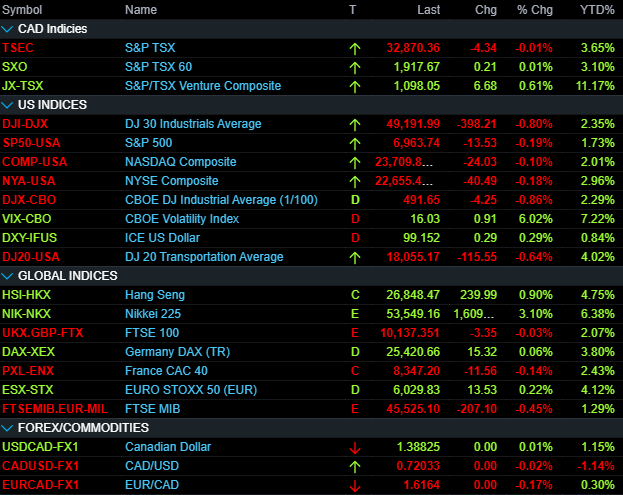
FactSet: 01/13/2026 at 4pm
Economic Snapshot:
US
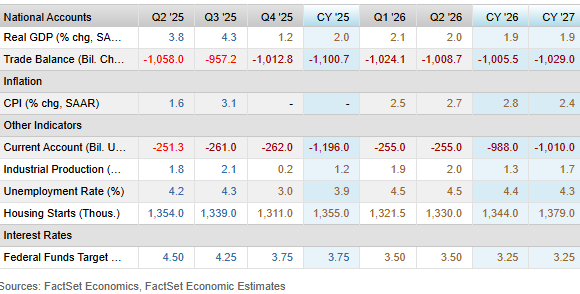
01/14/2026
CANADA
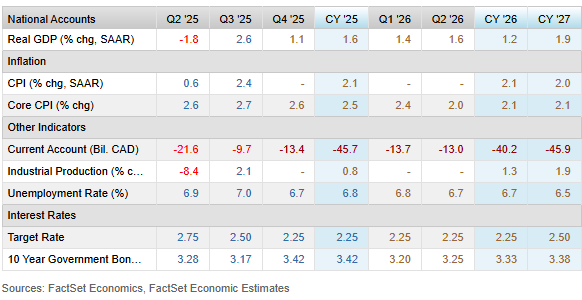
01/14/2026
What to expect in the coming month: Consolidated Annual Reports
We will be sending you individually a consolidated report for the year 2025.
This will show you a global view of your current asset allocation and your returns in one straightforward report.
Key date contribution reminders
- 2026 TFSA Contribution
The TFSA Contribution limit for 2026 remains at $7,000 CAD.
- 2026 RESP Contributions
To receive maximum grants, you can contribute up to $2500 per beneficiary annually until the age of 17.
- 2025 RRSP Contribution Deadline
The deadline for 2025 RRSP contributions is March 1, 2026.
- FHSA Contribution
The lifetime contribution limit is of $40,000 CAD & you can make a $8,000 annual contribution per year.
The Petrov Wealth Management Group accepts clients primarily by referral. If you think we can help a loved one or a colleague, please reach out and let us know.
Cheers,
Alexander & the Petrov Wealth Management Group