

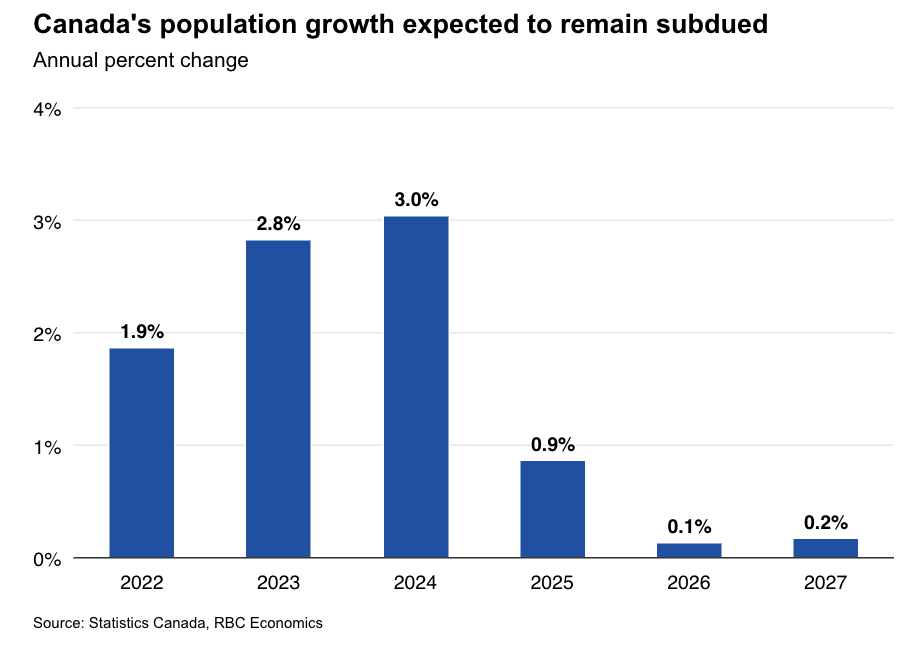
Canada's population growth continues to slow since tighter federal targets on permanent and non-permanent residents with Q2 marking the weakest quarterly growth since the pandemic.
As of July 2025, the population reached 41.7 million, reflecting a year-over-year increase of just 0.9%. However, much of this growth occurred in 2024.

Immigration drives population growth
A net outflow of non-permanent residents (NPRs) has been driving the slowdown. Even though, permanent resident targets were scaled back, immigration continues to be high from a historical perspective, and therefore, continues to cushion the slowdown in population growth.

Government seeing slippage relative to 2026 NPR target...
NPRs as share of the population fell for the third quarter in a row to 7.3%-but it's still a long way from the 5% federal target for the end of 2026. Canada would need to see a further net outflow of almost one million NPRs. So far, it has achieved just 11% of the required net NPR outflow by the end of 2026, despite being 25% through the period. This is based on the government's specific inflow/outflow targets, but adjusted for a higher 2024 starting point. NPRs were 7.5% of the population at the end of 2024 as opposed to an estimated 7.1% at the time of the government plan.
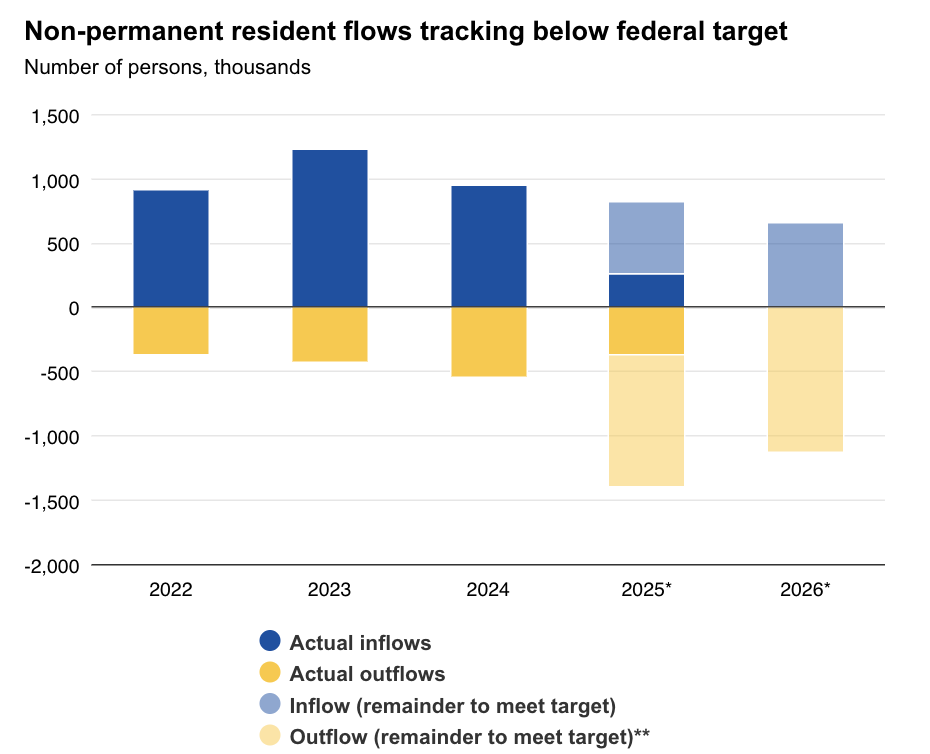
...but we've been assuming an extended timeline for NPR population normalization into 2027
Setting forward-looking population targets is not an easy task, given the government does not directly control NPR outflows, and permit holder behaviour and its timing are hard to predict.
It's clear that NPR outflows will ramp up more as existing permits expire, tighter eligibility criteria bite, and the weak labour market-including recessionary-type unemployment levels in some cities, especially, in southern Ontario where a disproportionate high share of newcomers settle-limit options for NPRS. Our population assumptions have the NPR adjustment extending into 2027, and on that barometer, the numbers for Q2 align. Therefore, our estimates of population growth are effectively unchanged at 0.9% in 2025, 0.1% in 2026, and 0.2% in 2027.
Early evidence of outflows stalling population growth in provinces
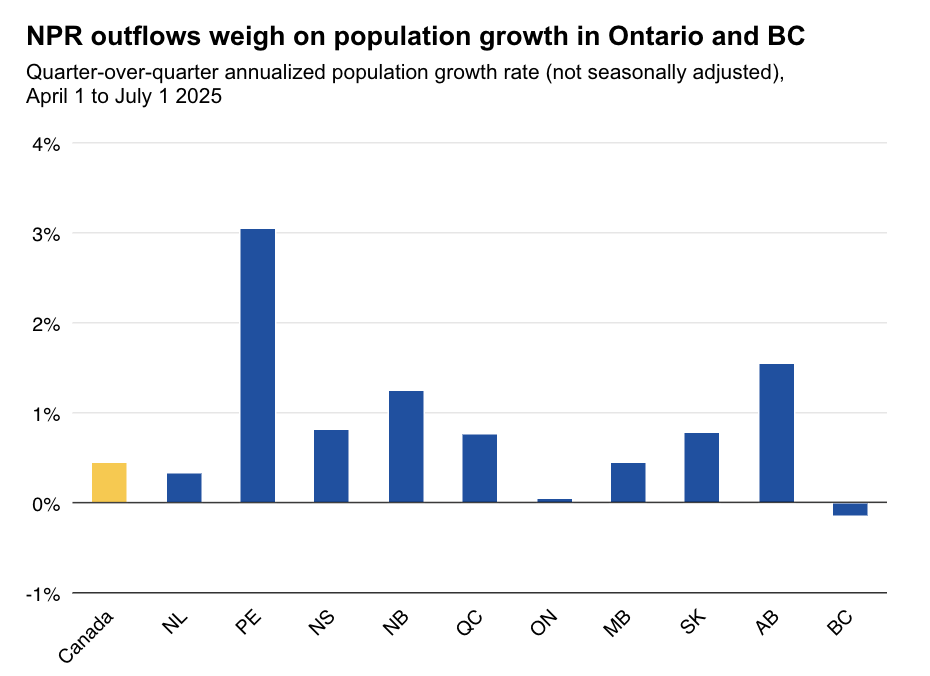
The sharp decline in NPRs is placing growing pressure on provincial population growth rates with Ontario and British Columbia experiencing the most significant slowdowns.
These provinces have historically been home to the largest shares of NPRs. In Q2, NPRS represented 8.6% of Ontario's population and 8.9% of B.C's.
Net NPR outflows have effectively stalled population growth for the last two quarters in these provinces with Ontario rising just 0.04%, and B.C. declining 0.15% in Q2 (seasonally adjusted, quarter-over-quarter annualized). B.C. had its largest non-pandemic-related population decline on record.
Weaker population growth from NPR outflows is likely to be compounded by persistent interprovincial migration trends. They have slowed from recent highs, but Ontario continues to experience significant net outflows with residents migrating to other provinces like Alberta and Atlantic Canada in Q2.
Slowing population growth returns Canada to aging trend
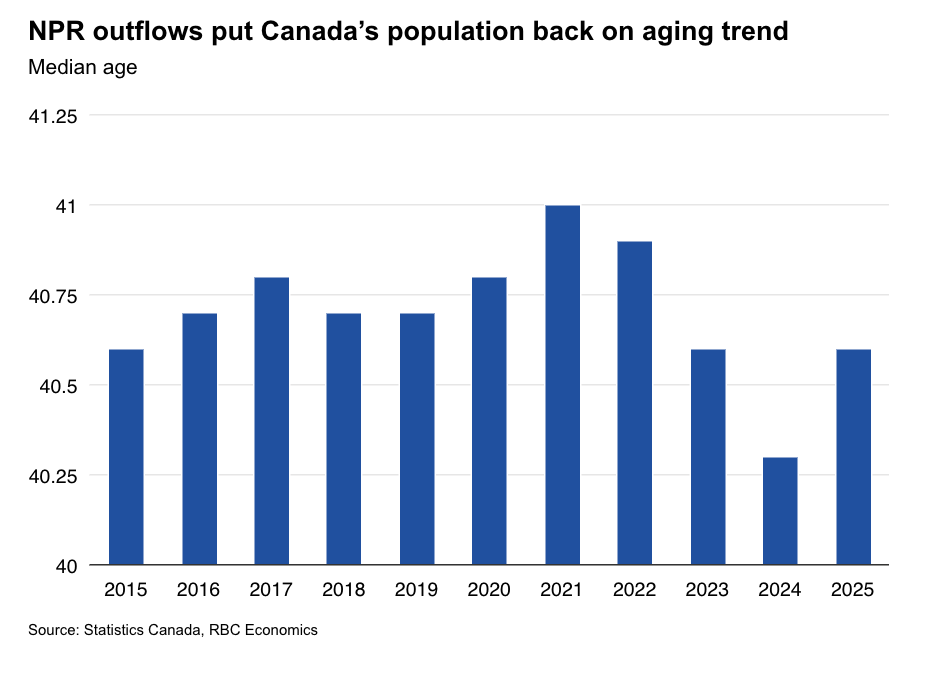
Exceptionally high in-migration in Canada in the last several years had stalled the effects of an aging population. The country saw a dip in its median age between 2022 and 2024-defying the trend since at least 1971. Now, Canada will no longer be able to push out further effects of population aging given the planned immigration policy reversal. And with the largest (and final) baby boomer about to reach official retirement age, Canada will be facing its peak impact over the next few years. In a sign of things to come, Canada's median age rose year-over-year in July. We write more about it here.
About the Authors
Cynthia Leach is Assistant Chief Economist at RBC covering the team’s structural economic and policy analysis. She joined in 2020.
Salim Zanzana is an economist at RBC. He focuses on emerging macroeconomic issues, ranging from trends in the labour market to shifts in the longer-term structural growth of Canada and other global economies.