

First of all, I would like to remind all my readers that no one—including myself—knows what the impacts of a tariff war are or will be. Contemplating and scrutinizing the news are, therefore, not ways to ensure adequate returns.
It is, however, a fantastic way to create anxiety and increase one's heart rate. Obviously, everyone has an opinion—from your brother-in-law to Paul Arcand. We just need to remember that these are opinions, not innate knowledge.
" Don’t throw stones at your neighbors, if your own windows are glass.”
— Benjamin Franklin, 1776
From an economic perspective, the American exceptionalism that the United States has embraced for over 80 years was born from postwar trade openness. It was the General Agreement on Tariffs and Trade (GATT) in 1948 that massively reduced barriers to international trade and that allowed the United States to expand throughout the world.
The USA allowed Europe to trade across the Atlantic to finance its reconstruction and it also allowed Americans to export their products and spread their expertise all over the world. The end result was excellent for all parties involved.
The main problem with tariffs is their reciprocal effect. Nothing prevents a nation hit by a tariff from retaliating. It is, therefore, a zero-sum game where the loser is always the consumer.
What seems quite rational to me is that the United States is unlikely to return producing jeans and shoes. These elements of international trade are unlikely to be reversed.
The debacle of the past few weeks has occurred with a force and speed not seen since March 2020. Several commentators are talking about a recession and a depression. I understand that sensationalism is great for ratings, but panic has never been a good idea.
I personally believe it's time, collectively, to take a deep breath.
Here's my reasoning and why I believe it's essential to keep a cool head:
1. It is impossible to quantify the risks of an economic depression.
2. Even if we could quantify them, it would be impossible to completely protect ourselves against them.
3. And even if we tried, these actions could devastate our portfolios if we made a mistake.
Thus, moving forward cautiously, regardless of the situation, remains the logical option with the greatest chance of success. This is true regardless of the source of the risk.
What should a worried investor do in the face of all this?
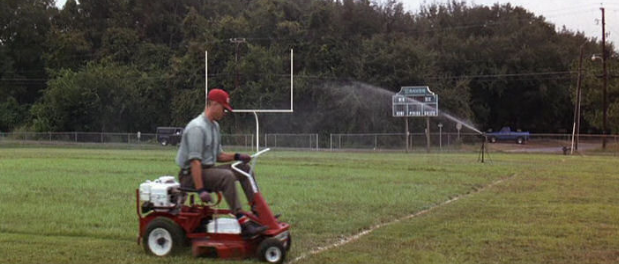
The Forrest Gump Strategy
I like to remind everyone of the strategy that I believe works best during volatile periods. In the 1994 film, Forrest Gump leaves his personal fortune in the hands of his friend, Lieutenant Dan. Forrest believes the lieutenant has invested his fortune in the "fruit" company Apple. At that point, Forrest states that he no longer needs to worry about money and decides to mow the lawn to pass the time.
There is something exceptional about this strategy. It captures the very essence of what Peter Lynch is trying to convey when he says, "The most important organ for an investor is the stomach, not the brain." With this in mind, mowing the lawn instead of worrying is an excellent investment policy.
It's important to remember that it's never the end of the world. The fall of 1987, the Dot-com of 2001, the financial crisis of 2008, and the Covid-19 pandemic in March 2020 were all temporary. Each of these crises was unique, but in each case, Forrest's technique would have worked.
Anthony and I don't have the luxury of sitting back and mowing the lawn. Rest assured, the most important work was done long before the current crisis. It's during our analyses that we ensured we have solid companies in our portfolios.
Today, our job is to find the best companies on sale. It's during these moments that tomorrow's best returns are built.
So, wish us happy shopping.
[1] Forrest Gump, Robert Zemeckis (1994)