

Plan - don't predict.
In this week's letter:
- Interest rate changes and your portfolio - the recent impacts
- The rate cutting cycle has started: should you be making changes to adapt your portfolio?
- Borrowers as rates get cut - strategies.
Interest rate changes and your portfolio - the recent impacts
We've been talking for the last couple of years about the risks and rewards of higher rates. With the first rate cut in Canada, the damage done to the bond market will now start to be on the mend. Regardless, there have been some very significant impacts.
Inverse relationship between bonds and interest rates
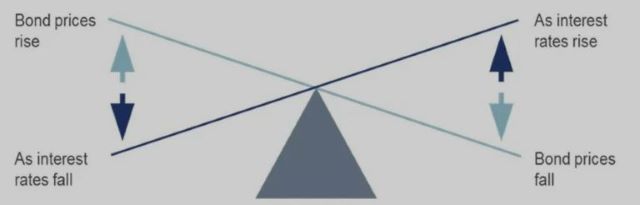
- Conservative investors holding bonds at the beginning of the hiking period were faced with the uncomfortable reality that when rates go up, bonds go down. This had a negative impact on the value of their portfolios. If invested properly and defensively - that is, if investors only purchased bonds that would mature before the end of their investment time horizon, this devaluation of portfolios would only be temporary. The total return of these bond portfolios was simply pushed into the future. Now that rates are being cut, those returns that were temporarily pushed further into the future will now be pulled more into the present. That will provide some portfolio relief for the retirement cohort.
- We witnessed the opposite story for investors who added fresh money to the bond markets and benefited from the most attractive returns we've seen for about 20 years. It's been an embarrassment of riches for investors looking to invest at low to zero risk over the shorter term, with GICs, Banker Acceptance Notes and a myriad of short-term bond funds mushrooming up to provide the best array of options we've seen in a long time.
- Now that the other shoe has fallen, we can expect those some fortunes to reverse. Although central bankers are telegraphing that rate cuts will not happen nearly as quickly as they did during the rate hike cycle, we are now heading the opposite way. We believe that as a matter of careful planning investors should prepare for a longer period to normalize rates. However, economic data including the usual - jobs reports, inflation, manufacturing, etc. - could impact the pace and regularity of cuts.
The rate cutting cycle has started: should you be making changes to adapt your portfolio?
As the cycle turns, we are having more discussions with investors about their portfolios and what updates we'll likely recommend. With each situation being unique, there is no one-size-fits-all solution, but here are the common threads we'll be considering when sitting down in semi-annual and annual review meetings.
The main question: are there any changes in the requirements or timelines of the portfolio?
For clients with a newer short-term time horizon for spending, such as for a home, we'd want to capture as much of the high-rate, low risk options as possible. Lining up that investment time horizon with the maturity date options available for bonds in the market is the primary goal. Within that more restricted world of options, there would remain a considerable range of solutions depending on investor's risk appetites.
Business Owners/Pre-retirees/retirees
We work with many business owner clients who are currently clarifying their succession planning time frame. The overall higher rates compared to the last twenty years which we expect to remain in place have boosted investors' ability to generate income and this has raised discussions of earlier retirement.
Investors can reach not just for higher payouts on newer bonds but can also benefit from the upcoming boost to a portfolio that can be generated by rate cuts. In this case, extending the duration of the portfolio - i.e., the period before you break even on a bond purchase - can be an effective way of capturing the upside in the bond market when rates are cut. Just as in the first discussion above, lowering rates will pull returns closer to the present, boosting portfolio value in the short-term.
If you're reviewing your own portfolio and plans and have more questions than answers, we'd be happy to set aside some time to discuss ideas and options to help you reach your personal goals. Please get in touch.
Borrowers as rates get cut - strategies.
Borrowers sit at on the opposite side of the same table shared by bond investors. While new bond holders over the last couple of years benefited from higher nominal returns, real returns were not fantastic considering how high inflation rose. Borrowers, and particularly new and variable-rate mortgage holders, have been squeezed.
And while central banks can manipulate the economy over the shorter term and cause gyrations for everyone seated at the table, we feel it is best to assume that rates will stay higher for longer. Those building plans based on interest rates hovering at or below 2% might just be setting themselves up using unrealistic and riskier assumptions.

When working with clients, our tack is lean to the conservative when it comes to economic expectations. That is, make sure your plans can work under more financial stress than you'd hope to experience. We aren't advocating for basing plans on the worst-case scenario because that is a bet which is as unlikely as the absolute best-case scenario. Making plans on narrow bands of possibility can make those plans unworkable. Our motto is simple:
Plan for probabilities, not possibilities
And in this case, we feel it is probable that the past rate environment of the 2010-2020 was more accommodative than what we can expect going forward Plan accordingly.
And with that, we'll wind up as always with this week's global insight.

In this week’s issue:
BoC-Fed divergence: In it for the long haul? The BoC lowered its policy rate, and we think it will continue to cut rates sooner and faster than the Fed. This may not be a passing fad given Canada’s relatively high debt load and weaker productivity. Divergence between the Fed and other central banks should be less acute, but fixed income investors outside the U.S. should consider U.S. exposure where rates will likely be higher for longer.
Regional developments: Canada’s economic growth slowed in Q1 amid tighter financial conditions; U.S. bonds rally as economic data slows, commodities fall; European Central Bank delivers the first interest rate cut, but with a hawkish bias; Indian equities fluctuate on general election results
This information is not investment advice and should be used only in conjunction with a discussion with your RBC Dominion Securities Inc. Investment Advisor. This will ensure that your own circumstances have been considered properly and that action is taken on the latest available information. The information contained herein has been obtained from sources believed to be reliable at the time obtained but neither RBC Dominion Securities Inc. nor its employees, agents, or information suppliers can guarantee its accuracy or completeness. This report is not and under no circumstances is to be construed as an offer to sell or the solicitation of an offer to buy any securities. This report is furnished on the basis and understanding that neither RBC Dominion Securities Inc. nor its employees, agents, or information suppliers is to be under any responsibility or liability whatsoever in respect thereof. The inventories of RBC Dominion Securities Inc. may from time to time include securities mentioned herein. RBC Dominion Securities Inc.* and Royal Bank of Canada are separate corporate entities which are affiliated. *Member-Canadian Investor Protection Fund. RBC Dominion Securities Inc. is a member company of RBC Wealth Management, a business segment of Royal Bank of Canada. ® / TM Trademark(s) of Royal Bank of Canada. Used under licence. © 2023 RBC Dominion Securities Inc. All rights reserved.